kevin@mitobcable.com
0086-18823374992
Some tips and methods for troubleshooting J1939 cables
Timely and accurate troubleshooting of J1939 cable faults is crucial for restoring the normal operation of the vehicle communication system. Here are some common troubleshooting techniques.
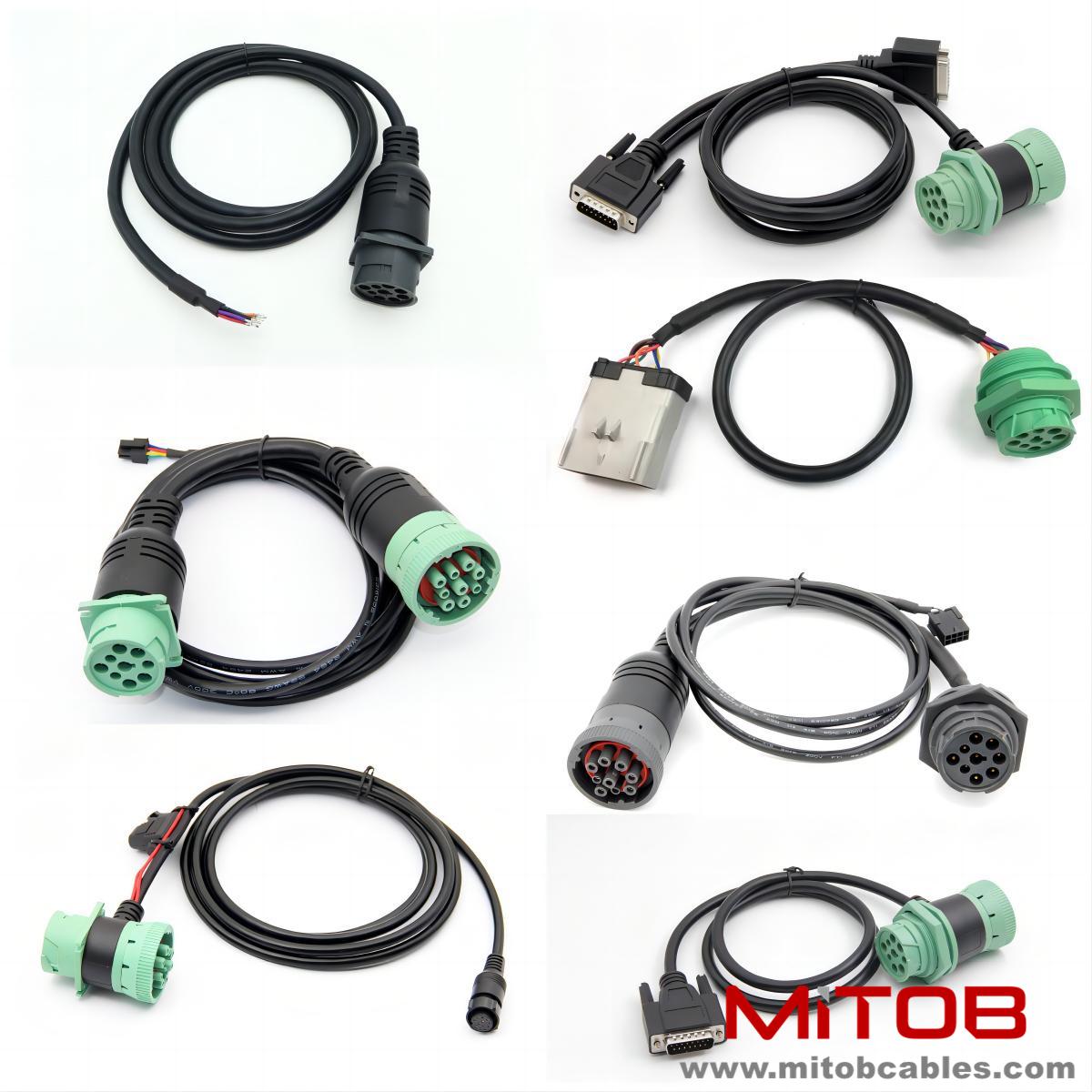
Firstly, a visual inspection is required. Check whether the cable has obvious damage, breakage, deformation, etc., and whether the connector is loose, oxidized, or damaged. If any appearance issues are found, they may be the direct cause of communication failure and should be repaired or replaced in a timely manner.
Using professional testing equipment to test the communication performance of cables is a key step in troubleshooting. It can measure parameters such as cable resistance and insulation resistance to check if they meet standard requirements. At the same time, observe the waveform of the communication signal through devices such as oscilloscopes to determine if the signal is normal. If the signal waveform is abnormal, it may be due to issues such as short circuits, open circuits, or signal interference in the cable.
Segmented troubleshooting is also an effective method for troubleshooting. Divide the cable into several sections, test and inspect each section to determine the specific location of the fault. For example, you can first check the connector and cable section at one end of the vehicle, and if there are no problems, then check the connector and cable section at the other end, and so on until the fault point is found.
Checking relevant equipment is also an important part of troubleshooting. Sometimes cable failures may be caused by problems with the devices connected to them. For example, ECU malfunction may cause abnormal communication signals, leading to the mistaken belief that it is a cable fault. Therefore, when troubleshooting cable faults, it is necessary to simultaneously check the operating status of the relevant equipment and whether the communication interface is normal.
In addition, referring to the vehicle's fault codes and historical maintenance records can also help quickly locate faults. The ECU of a vehicle usually records fault codes, which can be read by diagnostic tools to understand the approximate type and location of the fault. At the same time, checking the historical maintenance records can help understand whether similar faults have occurred in the cable before, as well as previous maintenance methods and measures, providing reference for current troubleshooting.
Contact: Kevin
Phone: 0086-18823374992
E-mail: kevin@mitobcable.com
Whatsapp:
Add: Bld B2, Floor7 , Xinghe Zhongkai AI Industrial Park, Zhongkai High-tech Zone, Huizhou,China